
There’s a fine line between maximizing your video content’s reach and making sure it doesn’t end up in the wrong hands. Ensuring your streams are secure is especially valuable when they are your main revenue generator.
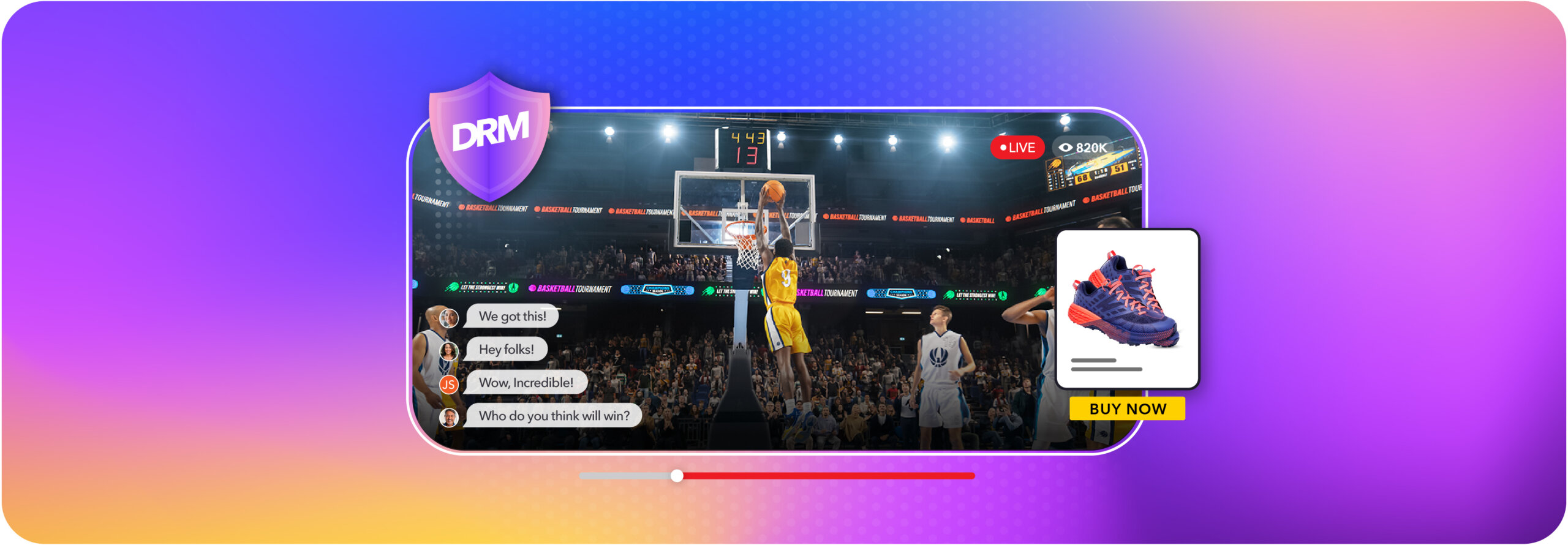
DRM, which stands for digital rights management, is a crucial component for many professional broadcasts. This security tool helps prevent content from being pirated or otherwise compromised.
In this article, we delve into the details of what DRM is and its significance in streaming. We’ll also discuss how DRM works and what it is used for.
Key takeaways
- Digital rights management (DRM) is an essential element for creating premium digital media experiences, especially in online video streaming.
- DRM is very important for protecting revenue, controlling content access, and more.
- There are several options for implementing DRM in video streaming, and choosing the right technology is critical for maintaining a high-quality user experience with seamless playback.
What is DRM?
Digital rights management (DRM) is a set of access control technologies that content creators, publishers, and other copyright holders use to protect their digital content from unauthorized use or piracy.
Using this sort of protection allows publishers or other copyright holders to:
- Control distribution: Ensure that only authorized users can access content, such as pre-made content libraries or live events
- Prevent unauthorized duplication: Restricts the ability to make illegal copies
- Enforce usage policies: Implement restrictions on how content can be used, such as limiting access to a specified number of devices
- Protect Revenue: Ensure that legitimate sales and use generate revenue
In an increasingly digital world, DRM is crucial for protecting your intellectual property rights and maintaining control over your content. It is particularly important in online video streaming.
The importance of DRM in streaming
Remember those anti-piracy ads that used to play before a DVD started? That was back in the days when pirating something often required sneaking into a theater, filming the screen, and burning a new DVD yourself.
Movies, games, software, and all other sorts of IP have progressed significantly, but so has piracy. That is why new technologies like DRM exist to combat it. DRM provides you with a mechanism for protecting your rights as a creator and helps ensure you receive fair compensation and ownership of your work.
With that in mind, there are several benefits to using DRM to protect your streaming media. Let’s check them out.
Revenue protection
When someone pirates a piece of content, the content’s producer often loses revenue. Movie leaks online, for example, would deter would-be moviegoers from attending a theater screening and paying for a ticket.
The U.S. Chamber of Commerce reports that digital piracy costs the U.S. economy between $29 billion and $71 billion annually. These figures underscore the substantial financial impact of unauthorized content distribution and consumption. Implementing digital rights management helps mitigate these potential losses by restricting access to legitimate users.
DRM helps ensure that creators, publishers, and distributors receive compensation for their work or investments and is critical in maintaining the economic viability of digital content industries.
Content control
Organizations can use DRM to specify not only who can access their content, but also how it can be accessed. This way, it’s less likely for someone to misuse or abuse the content.
For example, a content creator can control whether their content is published on a specific streaming service, thereby maintaining the integrity of their work.
Legal compliance
Legal compliance is another significant benefit of DRM. DRM facilitates the enforcement of copyright laws. These laws help maintain the balance between public access to information and creators’ rights.
Without DRM, creators would have less incentive to produce high-quality digital content, as the risk of losing revenue to piracy could outweigh the potential profits. Digital rights management solutions often include features and guidelines that help producers ensure compliance with legal regulations, not just potential pirates.
Legal compliance helps businesses avoid costly lawsuits and penalties.
Market expansion
If you want to distribute your content in new markets but want assurance that it will be protected, DRM is the way to go. For example, a film studio might be more inclined to release a movie internationally if it knows it’s safe from piracy.
How does DRM work?
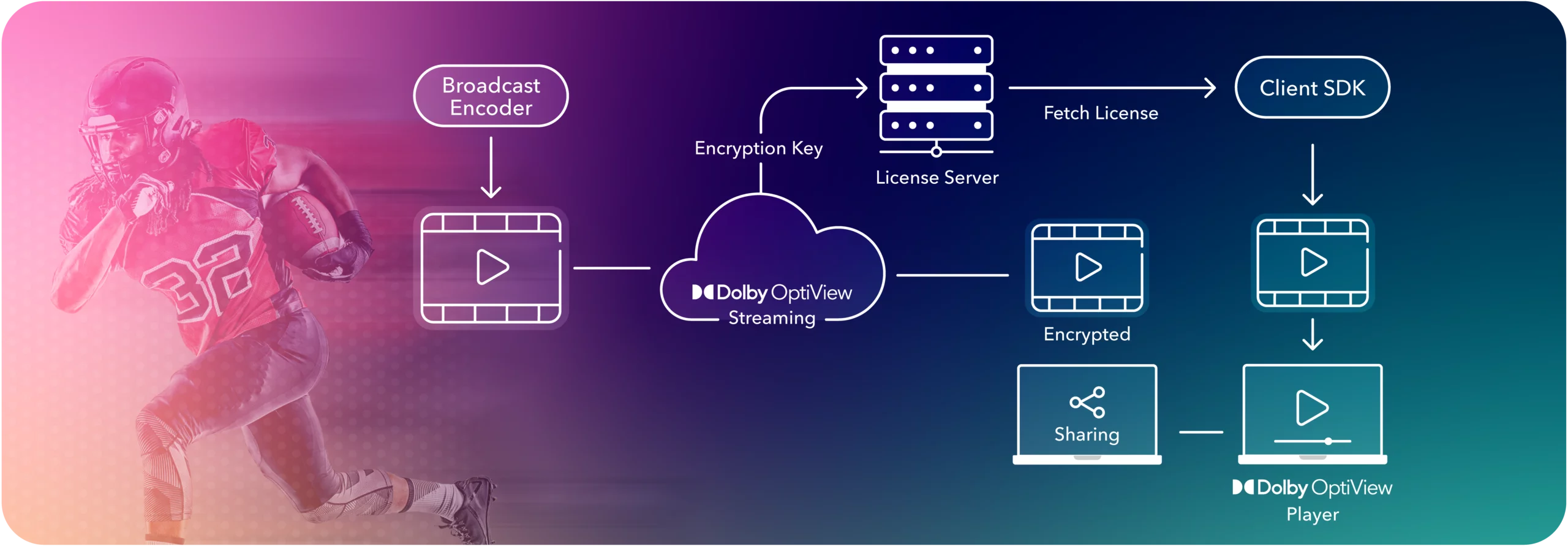
DRM works by embedding code in the content to control who can access and use it. When streaming with DRM enabled, the content is distributed with an additional level of encryption. To decrypt and view the media, the player and platform must enforce protections and be able to fetch a license used to decryption.
There are various DRM software options available that cater to different types of digital content, including music, video, ebooks, and software.
On a technical level, these solutions typically involve:
- Encryption: Securing the content so that it can only be accessed by authorized users
- Licensing: Providing keys or licenses that grant access to the content
- Authentication: Verifying the identity of the user attempting to access the content
You can learn more about how DRM works on a technical level, specifically within the Dolby OptiView ecosystem, in our dedicated guide.
What is multi-DRM?
Multi-DRM is a digital security strategy that leverages multiple encryption systems to ensure redundancy in its security mechanisms.
This security strategy is particularly important for ensuring effective security measures across multiple device types and operating systems when implementing a cross-platform delivery strategy.
Options for implementing DRM strategies
The DRM marketplace is diverse, encompassing solutions with built-in DRM software, standalone services, and devices.
For example, Dolby OptiView’s real-time streaming offers robust DRM features integrated directly into our streaming services, making it easy to protect your content from privacy threats while maintaining high-quality real-time streaming experiences.
Standalone DRM solutions, such as Adobe DRM, castLabs, Microsoft PlayReady, and Google Widevine, are options, as well. These services provide comprehensive tools for encryption, license management, and content distribution. However, the cost of these solutions varies according to the level of protection and features they offer.
Popular DRM use cases
DRM is used in several industries that distribute digital media, including video streaming. Here’s how DRM works in video streaming and other top use cases.
Video streaming services
DRM is important in video streaming because it ensures that video content is only published on authorized sites. That way, an unauthorized destination cannot restream content intended to be published exclusively for you and your partners. This is crucial for protecting ad revenue.
It also prevents video content from falling into the wrong hands. This is particularly important when content is monetized through subscriptions, pay-per-view, and other paywall-based methods, as it helps to prevent viewers from accessing the content without paying the required fee.
Platforms like Netflix, Hulu, and Amazon Prime use DRM to prevent unauthorized distribution of movies and TV series. These services rely on digital rights management to ensure that only paying subscribers can access their content.
It is particularly valuable for sports streaming, since licensing tends to be specific about who is allowed to stream what content.
Music
Musicians and record labels utilize DRM to prevent unauthorized downloading and sharing of music. The same ideals for protecting video streaming content apply to music as well.
Spotify and Apple Music are two major platforms that embed DRM into their systems to control who can listen to and download songs.
Digital documents
Companies utilize digital rights management programs to safeguard sensitive documents, reports, and other critical files from unauthorized access. This is especially imperative in fields like finance and government.
Ebooks
Book leaks can be an author and publishing company’s worst nightmare, so publishers employ DRM technology to control who can access ebooks and ensure authors are adequately compensated.
Amazon Kindle and Apple Books are examples of platforms that implement DRM to prevent the copying, sharing, and printing of digital texts.
Software
Without DRM, software is also vulnerable to unauthorized copying and selling. This includes both consumer software, like Microsoft Office, and specialized software used in professional fields, such as CAD programs.

Challenges of DRM for video streaming
Although DRM is a very important element in creating high-quality video streaming experiences, it does come with a couple of challenges that video publishers should be aware of. Let’s take a quick look.
User experience
Depending on the type of DRM solution you use or its specific features, the technology can hinder the user experience if it imposes overly restrictive limitations on legitimate users.
They might find these restrictions inconvenient, such as the number of devices they can access purchased content, which can cause frustration. If this is the case, then consumer backlash can pose a significant threat to the business.
These frustrations can be overcome by leveraging a DRM solution that takes a multi-DRM approach for seamless cross-platform playback.
Technical issues
Implementing DRM can be complex and may lead to technical issues if not properly integrated, such as compatibility problems with specific devices or platforms. These technical hurdles can deter users from purchasing your content if they encounter them (though they may not be aware of the exact source of the issue).
This can be overcome by ensuring that the DRM software you use is seamlessly integrated into your chosen streaming solution. Choosing a streaming solution with built-in DRM support helps create a more seamless experience.
Piracy adaptation
Digital rights management technology continues to advance, but so does piracy. It’s unfortunate, but a reality producers need to be aware of.
Determined pirates may still find ways to circumvent protections that necessitate ongoing updates and improvements, so there is no airtight solution.
FAQs
“DRM” is short for digital rights management. It helps protect digital media, such as audio and video, from piracy. DRM is particularly valuable for ensuring secure video streaming.
A DRM license provides a publication with the access credentials to publish protected digital media.
No, DRM does not completely prevent piracy. However, it greatly reduces piracy, which helps to protect revenue.
It varies by area and jurisdiction, but in some locations, it is illegal to remove DRM protections from digital content. Doing so could violate copyright laws and result in legal penalties.
Removing DRM also undermines content creators’ efforts to protect their IP, though others may argue that consumers should have the right to remove DRM from content they legally own, especially if it interferes with their legitimate use.
Streaming services use DRM to encrypt video streams and require authentication before playback. This helps ensure that access to streams is limited to the intended viewer. It also helps prevent video content from being restreamed by unauthorized destinations.
Google Play Movies, for instance, utilizes Widevine DRM, while Apple TV+ employs FairPlay DRM.
DRM should not significantly affect your video playback performance if it is properly implemented. Choosing a DRM provider that is capable of protecting your content while maintaining your playback standards is key.
Many sports streaming services are particular about which viewers can access different sporting streams. This is because of regional broadcasting agreements that create blackouts for local teams. DRM can be used to enforce these restrictions.
DRM is also significant for streams that involve live sports betting. By creating a more secure streaming experience, you can keep the experience fair for all bettors.
DRM can be considered controversial because it often imposes restrictions on how consumers can use digital content, which some view as limiting their creative rights. Critics argue that DRM can inconvenience legitimate users and is not always effective at preventing piracy.
However, advocates believe it’s essential for protecting IP and ensuring fair compensation. In general, DRM is a positive thing in the video streaming industry.
Final thoughts
DRM is beneficial for many streaming setups since it provides security and helps prevent your stream from being compromised or pirated. When you spend time and resources producing or licensing content, you don’t want it to end up in the wrong hands.
Dolby OptiView offers a robust streaming solution with built-in DRM to protect your digital content. By integrating DRM directly into our streaming platform, we ensure your content remains secure while delivering a seamless, high-quality viewing experience for your audience.
Contact us to learn how leveraging DRM and other security measures can help improve your streaming workflow and elevate your viewers’ experience.