Low-latency streaming is crucial for creating interactive experiences in live sports. However, certain industry considerations make low-latency sports streaming somewhat challenging. Fortunately, there are some tools you can leverage and technical tweaks you can make that make low-latency streaming accessible.
In this article, we will discuss what low-latency means in the context of live sports streaming. We’ll cover what low-latency sports streaming is and why it matters so much for both media publishers and their viewers. We will dive into the technical elements that affect latency in live sports streaming.
With this insight, publishers know what they need to do to optimize their streaming tech stacks for a highly engaging, low-latency streaming experience.
Key takeaways
- Low-latency streaming reduces the delay between live action and playback, but the right target depends on the sports use case, scale, and device mix.
- In live sports, latency affects betting windows, synchronized fan experiences, interactive features, spoiler risk, and perceived stream quality.
- The lowest possible latency is not always the best business outcome; many sports workflows need the best balance of speed, consistency, and reliability.
- Protocol choice, encoding, CDN behavior, player buffering, device fragmentation, and monetization workflows all influence how close a stream stays to live.
- Dolby OptiView helps teams tune latency for live sports while maintaining quality, monetization flexibility, or cross-device consistency.
What is low-latency live sports streaming?
Low-latency live sports streaming is an online sports broadcast with minimal delay between capture and playback.
As we discuss latency in this guide, we will focus on “glass-to-glass” latency. If you’re not familiar, “glass-to-glass” latency refers to the time lapse between when a video signal is recorded by the camera and when it appears on viewers’ screens.
With glass-to-glass latency, there are different categories based on the amount of latency. These include standard, low, ultra-low, and real-time latency. Standard latency is between 10 to 30 seconds, low latency is typically 5 to 7 seconds, ultra-low latency is typically around a second, and real-time latency is typically under a second. We will compare these latency tiers based on their ideal application in live sports later in this guide.
Keep in mind that latency can also refer to other delays in streaming, such as breaks in video-data synchronization or A/V sync. When it comes to creating synchronized user experiences, the target is typically imperceptible latency, so the experience feels more natural and lifelike.
Why latency matters in live sports streaming
Live sports streaming raises the stakes for latency, as delays can compromise the user experience. Delays can cause spoilers, disrupt shared live moments, and compromise interactive experiences, such as sports betting, synchronized stats sharing, multiview streaming, and fan interaction.
In live sports, latency shapes betting windows, audience synchronization, fan participation, ad execution, and trust in the stream — not just transport speed. With that in mind, let’s look at why latency matters in live sports streaming.
Fan participation and synchronized shared moments
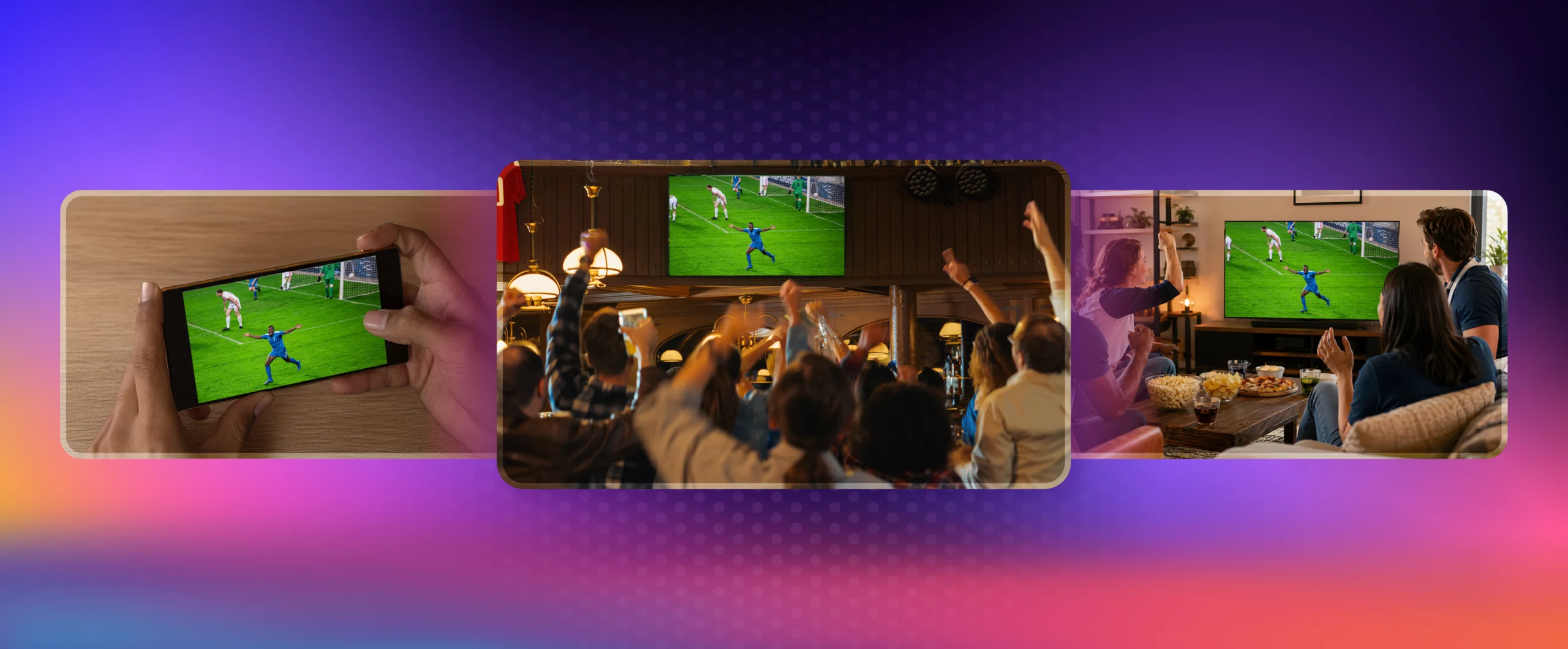
Low-latency sports streaming facilitates social viewing experiences that facilitate fan participation and interaction. The communal energy is a very important element of sports streaming because it helps mimic the social aspect of in-person sports spectating.
Some important interactivity functions that low-latency streaming unlocks include:
- Watch parties
- Social sharing
- Seal-time stats
- Trivia
- Polls
- Second-screen engagement.
It’s also worth noting that cross-viewer consistency matters as much as raw delay. By creating equal experiences that keep viewers in sync, pivotal moments of the events you’re covering are shared among fans on all different devices.

Quality expectations during high-profile live events
Expectations for high-quality viewing experiences are rising in live sports streaming as technology enables more pristine video delivery. Buffering, drift, and instability can undermine premium sports experiences even if nominal latency is low.
This is particularly important as more and more sports streaming platforms enter the market. If you want to stay ahead of the competition, you have to ensure seamless, synchronized playback.
Betting windows, fairness, and video-data sync
One of the most valuable aspects of low-latency streaming in live sports is that it opens doors to richer sports betting experiences.
Latency is especially valuable in connection to video and odds synchronization because it is essential for trusted in-play betting. This expands betting windows, creating more engaging fan experiences and giving you more ways to monetize your sports live streams.
Latency tiers in live sports streaming
As we mentioned, there are several different latency tiers in live sports streaming, several of which fall under the umbrella of “low latency.”
| Length (seconds) | Pros | Cons | Best Application | |
|---|---|---|---|---|
| Standard | 10-30 seconds | Highly predictable and great for accommodating synchronized streaming at scale | Not ideal for interactivity | Streaming large-scale sporting events |
| Low | 5-7 seconds | Very scalable | Less ideal for interactivity | Streaming large-scale sporting events |
| Ultra-Low | ~1 second | Provides a great balance between scalability and interactivity | N/A | High-engagement live sports experiences where responsiveness matters, but scale is still a major concern |
| Real-Time | Less than 1 second | Great for interactivity | Can be difficult to achieve at scale | Implementing highly interactive live streaming experiences with in-play betting, social viewing, and more |
With this general comparison in mind, let’s dive a bit deeper into each latency tier to understand the optimal applications for each.
Standard latency
For years, standard latency was the baseline for all sports broadcast experiences. It aligns with typical television broadcast latency, which is 10 to 30 seconds.
Standard latency is not considered “low latency.” However, it remains an option for live sports applications that prioritize high QoE, reach, and consistency for massive audiences, such as large sporting events.
Low latency
Low-latency streaming is currently defined as a delay of 5 to 7 seconds. Live streaming with this latency produces a similar effect to traditional television broadcast, creating predictable latency at scale.
Like standard latency, low-latency streaming is great for large-scale events. This is because it adds padding to accommodate variable network conditions and other delivery disruptions.
Ultra-low latency
Ultra-low latency typically involves a delay of about 1 second and is considered a high-performance option for live sports. It is a practical choice for sports experiences that need to stay very close to live without delving into full real-time complexity.
This latency tier is optimal for streaming high-engagement sporting events where interactive elements matter, but scale remains a priority.
Real-time latency
Real-time latency is sub-second or near-sub-second and is meant to facilitate highly interactive workflows. This latency tier is suitable for facilitating live streams with in-play betting, interactive experiences, and other premium use cases where synchronization is crucial.
What are industry benchmarks for sports streaming latency?
As we mentioned, glass-to-glass latency is an important consideration in live sports streaming. However, there are other industry benchmarks to aim for. Here are some benchmarks to consider when assessing your live sports streaming setup.
Glass-to-glass latency benchmarks
Glass-to-glass latency is one of the most significant benchmarks that live sports streaming publishers monitor because it is relevant to the functionality of their experiences. With that said, it’s very important to benchmark end-to-end delay by use case rather than chase one universal target.
For example, if betting is an important part of your live sports streaming setup, aiming for ultra-low or real-time latency makes sense. However, if you’re aiming to reach an audience in remote areas around the world, introducing a bit of latency can help prevent lag and buffering.
Cross-viewer consistency benchmarks
Another important benchmark is related to creating cross-viewer consistency. The goal should be to create a fully synchronized viewer experience that allows all fans, no matter their location or the type of device they are tuning in on, to experience key moments at the same time.
Viewers experiencing the stream several seconds apart can be as damaging as the absolute delay itself, because they break the social viewing experience and compromise sports betting workflows.
Startup time, rebuffering, and stability benchmarks
There are quite a few other KPIs that are worth monitoring when creating premium sports streaming experiences that reflect well on your brand.
For example, ensuring fast startup times and preventing buffering can help create a more stable viewing experience. Staying on top of these benchmarks is critical because unstable low-latency streaming does not create a premium sports experience.
Technical factors that shape low-latency sports streaming at scale
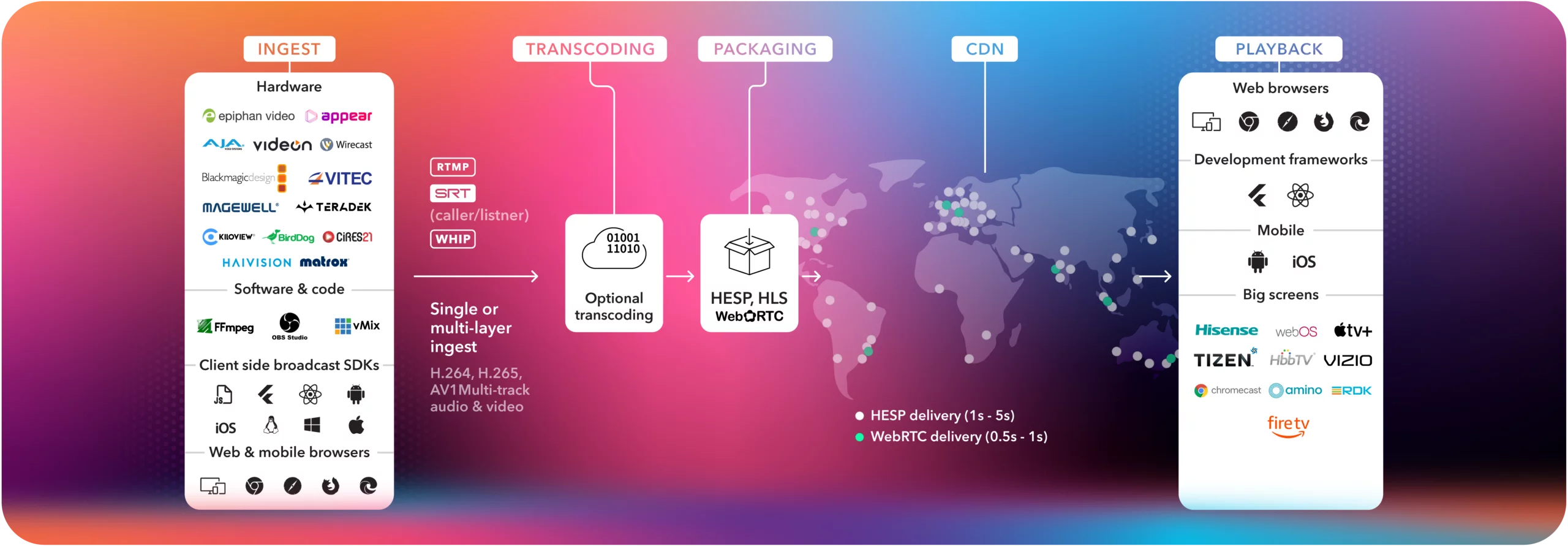
Latency is quite nuanced from a technical perspective, since several factors affect the delay of a live stream. Let’s take a moment to break down these factors to help you understand where latency might be introduced within your live sports streaming workflow. Latency can be related to frame look ahead buffers, network buffers, CDN, player buffer, GOP size.
CDN delivery and regional scale
The locations of your viewers and their proximity to CDN servers also affect latency. Opting for a multi-CDN approach can help cover edge delivery with broader geographic distribution.
Aside from broader geographic coverage, this approach provides greater bandwidth to maintain stable latency and performance during viewership spikes at large-scale events. Plus, using a multi-CDN approach also helps create redundancy in case one network crashes during a stream.
Player buffering and device fragmentation
Device fragmentation can cause players to buffer since different devices and operating systems behave differently under low-latency configurations. That’s why streaming to users across different browsers, mobile devices, smart TVs, and connected TV platforms requires slightly different workflows to ensure equal experiences.
Leaning into the support of a cross-platform streaming solution, like Dolby OptiView, comes in handy here. Solutions like this are built to navigate device- and operating system-specific differences to create a consistent experience no matter how a viewer accesses the stream.
Ad insertion and monetization workflows
If it’s not implemented properly, your monetization architecture can bog down your streaming workflow, adding delay, disrupting playback, or complicating low-latency delivery. That’s why it’s important to ensure any tools that are added to your tech stack are optimized for facilitating
Server-Guided Ad Insertion (SGAI) is an excellent option for keeping your ad workflow seamless and synchronized. If you’re not familiar, this innovative ad technology is responsive to the viewer’s behavior, so it is suitable for creating highly personalized ad experiences, which is an added benefit.
Comparing HLS vs. HESP vs. WebRTC for sports streaming
HLS, HESP, and WebRTC are among the most common protocols for sports streaming. Here’s a breakdown of the latency that each protocol produces, along with pros and cons and optimal applications for each.
| Typical Latency | Pros | Cons | Best Application | |
|---|---|---|---|---|
| HLS | 9+ seconds | Highly predictable for streaming to a larger audience | Not suitable for interactivity | Streaming at scale with broader device reach and controlled delay |
| HESP | 1-9 seconds | Flexible latency configuration that can accommodate both interactivity and streaming at scale | N/A | High-engagement live sports experiences where responsiveness matters, but scale is still a major concern |
| WebRTC | Sub-second | Excellent for creating interactive experiences | Not suitable for streaming at scale | Implementing interactive experiences with in-play betting, social viewing, and more |
How to choose the right protocol
Choosing the right protocol depends entirely on your goals and which latency tier best supports them. Typically, there is a tradeoff between mass distribution and the lowest possible latency.
With that said, if low latency is not your priority, HLS is the way to go. WebRTC is optimal for real-time streaming with interactivity, in-play betting, and highly synchronized experiences. HESP bridges the gap between the two for publishers who are looking to facilitate fan engagement at scale.
How Dolby OptiView helps publishers balance latency, quality, and monetization
Achieving low-latency sports streaming that maintains quality and supports effective monetization requires a robust streaming solution designed specifically to balance latency and quality. Dolby OptiView brings all that and innovative tools for monetization and interactivity.
Let’s take a look at how Dolby OptiView helps online sports broadcasters create engaging, profitable experiences with low-latency streaming.
Tune latency for your specific use case
As we’ve discussed, there isn’t a single “best” latency for live sports streaming. Although Dolby OptiView can deliver sub-second latency, our solution recognizes that real-time latency isn’t always the goal.
That’s why we offer configurable latency, enabling sports media publishers to introduce as much latency as is required to reach their specific goals. With configurable latency, you can choose the delay that works best for you.
Deliver synchronized, premium experiences across devices
Creating fully synchronized cross-platform streaming experiences is a significant strength of Dolby OptiView. This enables online sports broadcasters to create higher-quality user experiences that are consistent across devices.
This synchronization helps keep viewers aligned, which is ideal for facilitating social interaction in virtual experiences.
Support monetization and sports betting use cases
Monetization and interactivity are valuable components of many live sports streaming experiences. However, unless they are implemented properly, they can introduce unnecessary latency. Fortunately, Dolby OptiView’s low-latency sports streaming infrastructure is built with these components in mind.
Dolby OptiView supports low-latency advertising workflows so you can monetize your content while keeping your latency where you want it. Our solution also serves as a solid foundation for integrating interactive workflows that support betting, audience engagement, and more.
FAQ
Typically, a screen-to-screen delay of 5 to 7 seconds is considered “low latency.”
Live sports streaming is often delayed due to variations in users’ chosen devices and internet stability. Since broadcast television relies on dedicated delivery systems and compatible devices, there’s greater consistency, enabling slightly lower delay.
Lag in online sports broadcasts can be caused by internet connection issues, device fragmentation, and less-than-optimal streaming infrastructures.
Latency of under one second is typically considered “ultra-low” latency.
Yes, you can reduce latency without hurting the stream quality with the right streaming infrastructure. This is where adaptive bitrate streaming comes in handy.
Final thoughts
Low-latency sports streaming is a powerful tool for engaging fans both near and far. Streaming with low latency unlocks opportunities for interactivity, betting, and innovative monetization. This makes an investment in the appropriate infrastructure a no-brainer for sports media publishers.
Ready to create more immersive fan experiences with low-latency sports streaming? Dolby OptiView has the solution you need to balance latency, quality, and monetization for engaging streaming experiences that generate revenue.
Contact us today to learn how our robust toolkit can help you create more engaging, low-latency sports streaming experiences.